
Halal chilled essentials: yoghurt, salted yoghurt drink, labneh, clotted cream (kaymak) and regional cheeses
The fridge shelf is where Middle Eastern cooking does its quiet work. Here's what to stock, what to look for on the label, and what to actually do with each one.
Halal certified · Hand-slaughter standards · Delivered to any BS postcode
The chilled aisle is where a Middle Eastern household most obviously diverges from a British one. The British fridge is built around milk, butter, eggs, a few cheeses, and a few yoghurt pots. The Middle Eastern fridge has three or four yoghurts (each used differently), at least two white cheeses, often a cured meat or two, salted yoghurt drink in a bottle, yoghurt-cucumber dip/labneh in a bowl, fresh herbs in jars of water, and pickles on the door.
This guide walks through the chilled staples - what each one is, how it differs from its British analogue, and how to source it without driving across town for every shop.
Yoghurt - the foundation
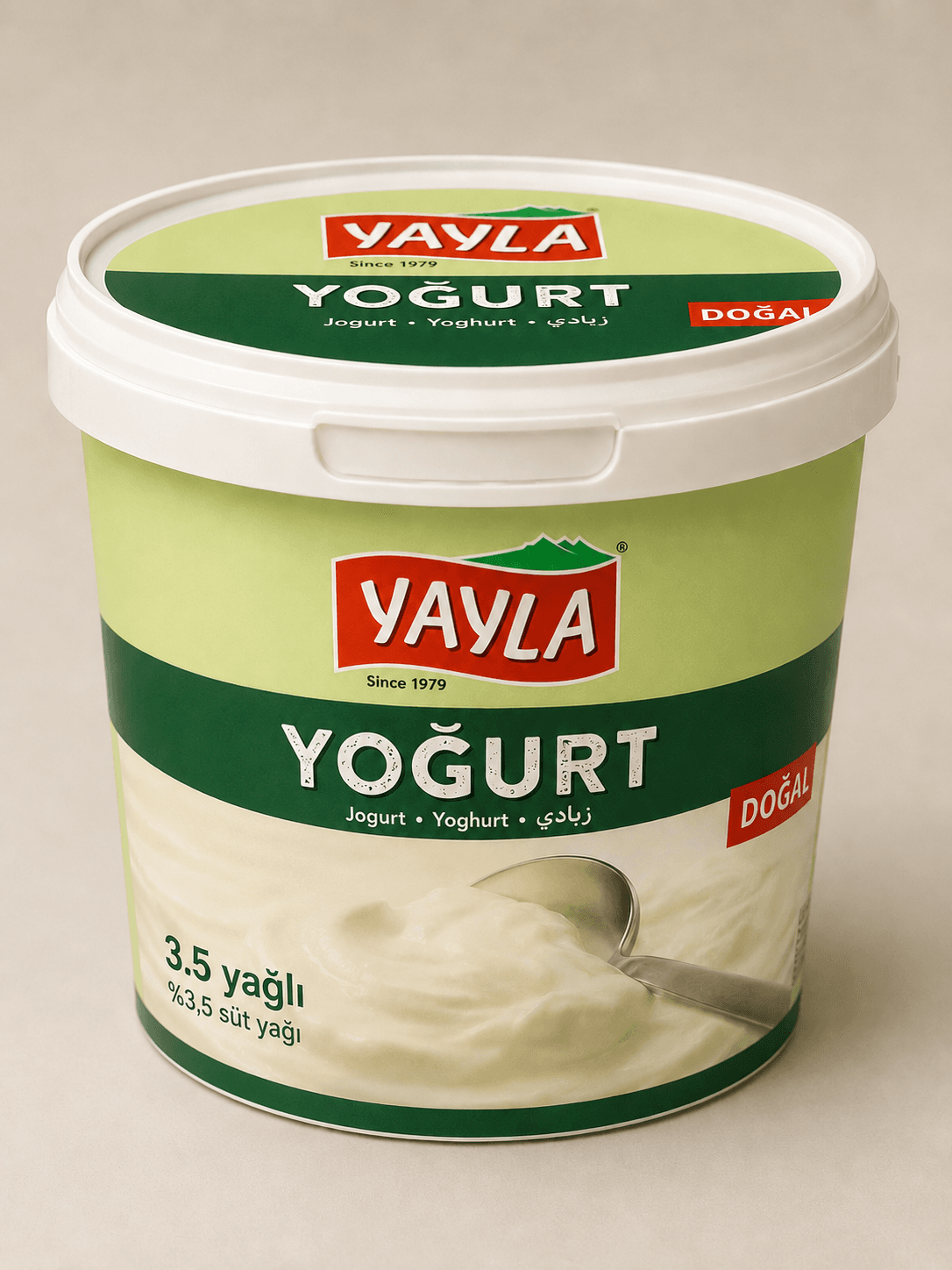
You will use more yoghurt than you expect. It is the base of marinades, the cooling element in sauces, a binding agent in some doughs, a dip on its own, a cup of salted yoghurt drink with lunch, and breakfast itself. The regional word for yoghurt is yoghurt; the Greek is yiaourti; the Arabic is laban; they are all roughly the same family of food with cultural variations.
What to look for:
- Full-fat (4%+). Low-fat yoghurts work for British weight-conscious cooking, but for Middle Eastern cooking they thin out and lose tang.
- Live cultures. All proper yoghurts have these. Most supermarket "yoghurts" do too - check the label says "live and active cultures" if you're buying mass-market.
- No added sugar or flavouring. Plain only.
- Cow's milk for everyday; sheep's or buffalo's for premium dishes when you can find them.
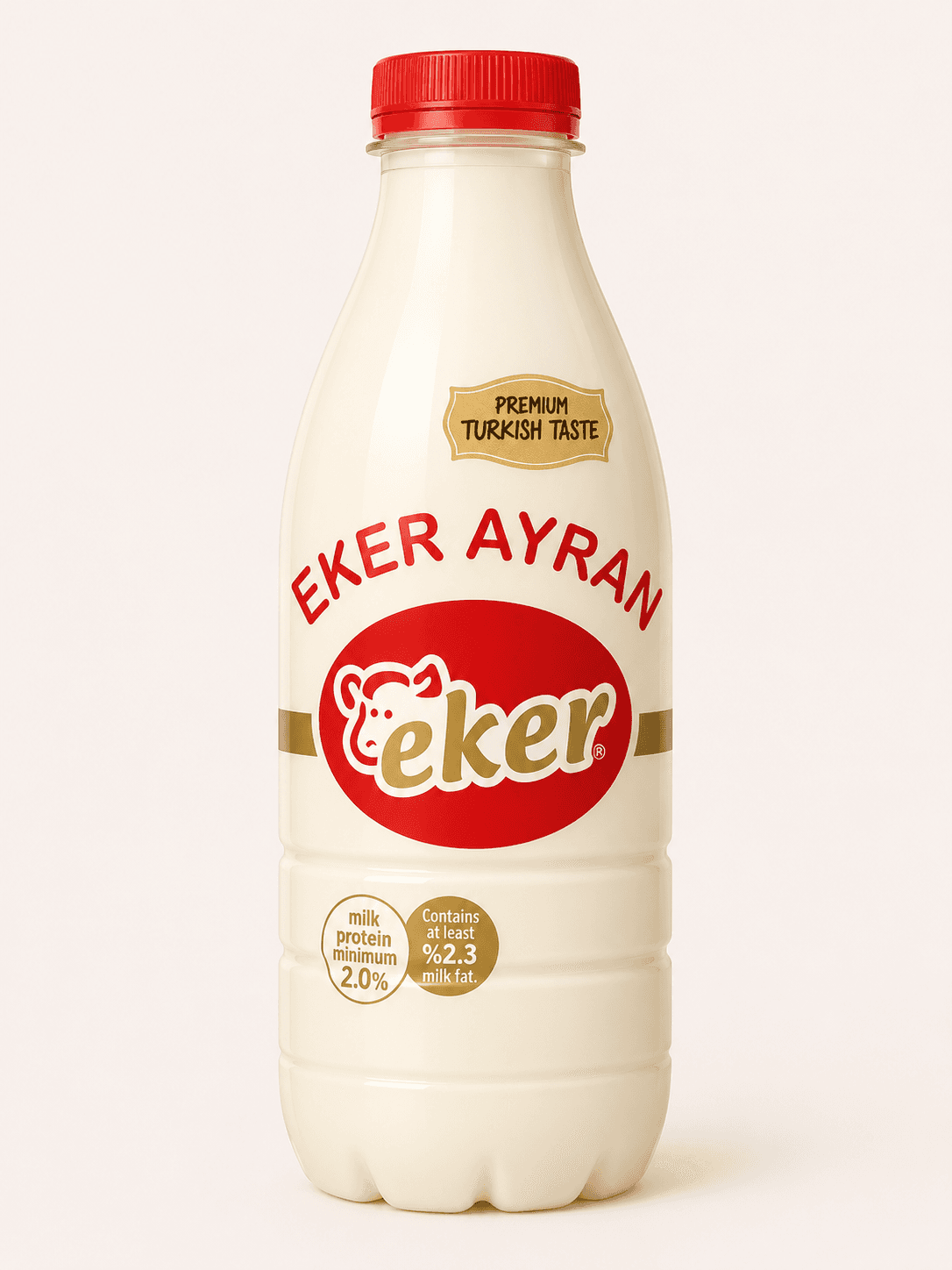
The good Mediterranean yoghurt brands in UK supermarkets (Total, Lyburn, Yeo Valley Authentic Greek) are reasonable. The regional brands you'll find at specialist grocers (the regional brands, Eker, sometimes the regional dairy brands) are noticeably tangier and thicker.
strained yoghurt and labneh
strained yoghurt is strained yoghurt - most of the whey drained out, leaving a thicker, spreadable, more concentrated yoghurt. In Levantine kitchens it's called labneh.
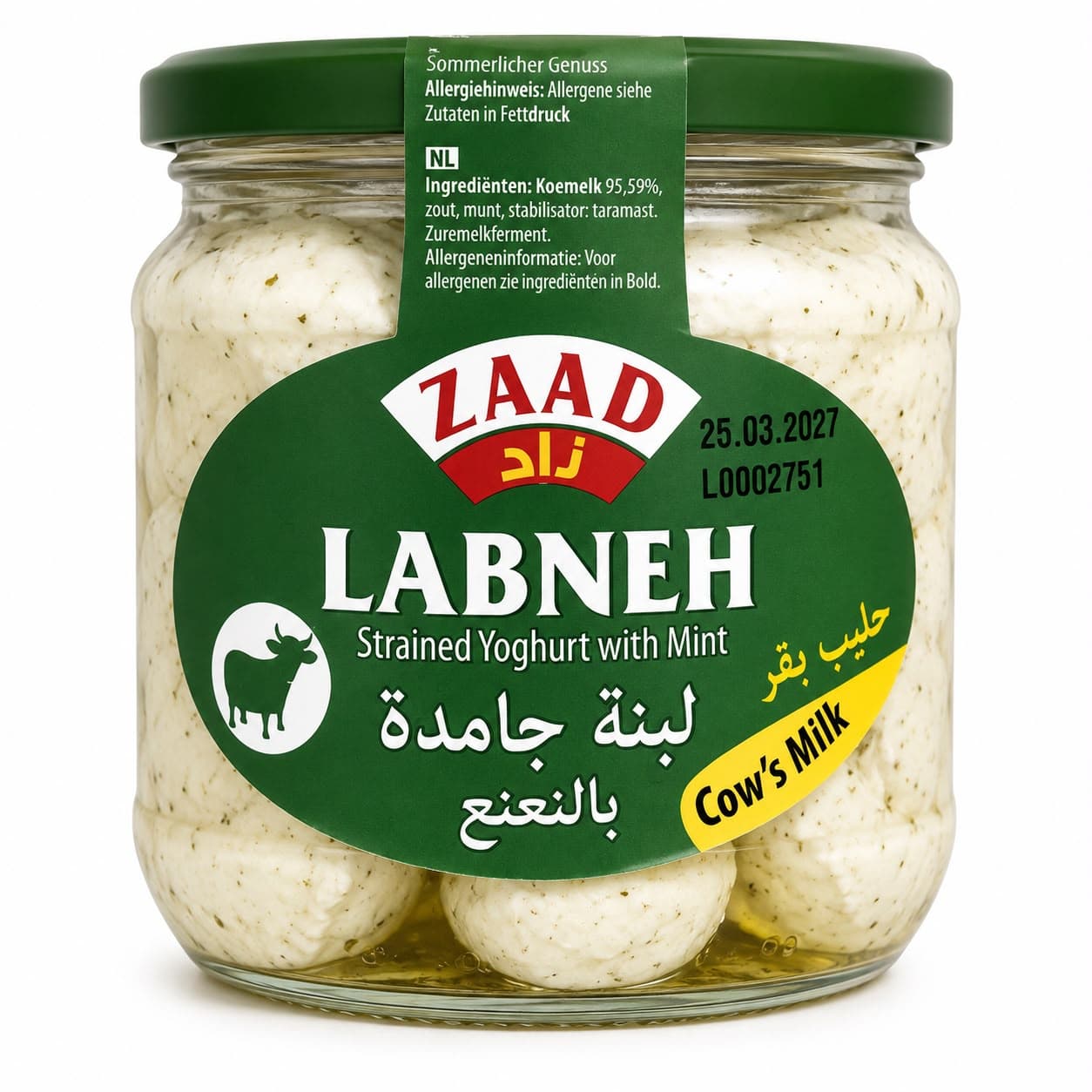
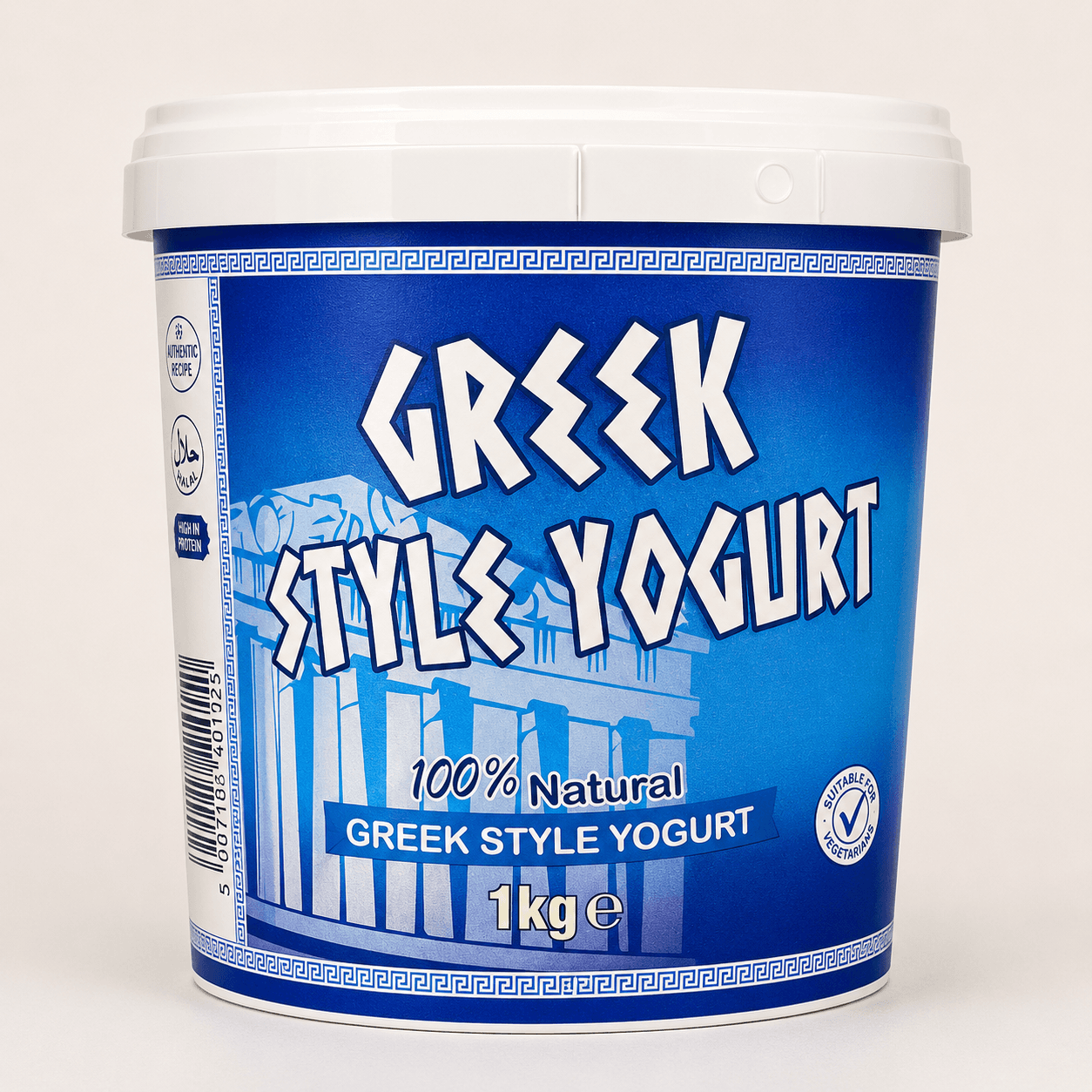
The regional supermarket version comes in a tub labelled "strained" or "thick" - closer to British "Greek-style" but tangier. The Levantine version is often sold as labneh balls in olive oil in a glass jar - these keep for months and are an excellent addition to a meze board.
What labneh / strained is for:
- On the meze table with olive oil and za'atar drizzled over.
- As a spread on bread with cucumber, mint, and a sprinkle of sumac.
- As a base for dips - labneh with crushed garlic and herbs becomes yoghurt-cucumber dip.
- As an icing-like layer on savoury flatbreads.
- As a cool counterpoint to spicy grilled meat.
Make your own by placing yoghurt in a muslin cloth over a bowl, refrigerating for 12-24 hours. The longer you strain, the firmer it becomes. Day-old labneh is spreadable; 2-day-old labneh is dippable; 3-day-old can be rolled into balls.
Salted yoghurt drink - the drink
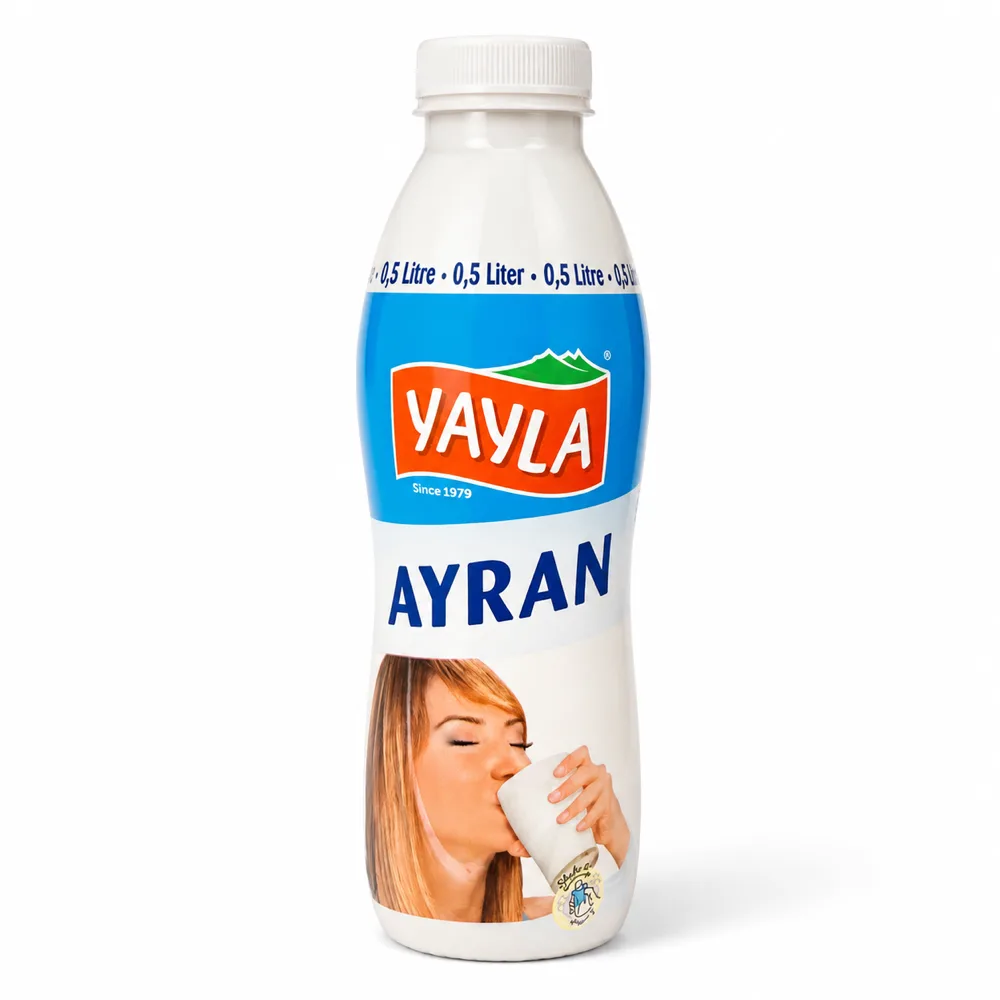
A salted yoghurt drink. Bottle in the chiller, refrigerated, drunk cold. The mass-market version (in PET bottles, e.g. the regional brands or the regional brands salted yoghurt drink from Middle Eastern grocers) is fine. Premium versions are made fresh by some shops.
Drink it with:
- Kebab plates. The salt + cool yoghurt cuts through grilled meat fat.
- Pilaf and stews. Same reason.
- Anything cumin-heavy. Cumin and a salted yoghurt drink is a classic pairing.
Don't drink it as a stand-alone refreshment unless you've grown up doing so - the salt level surprises British palates.
Yoghurt-cucumber dip (tzatziki, more or less)
Yoghurt + grated cucumber + crushed garlic + mint + olive oil + salt. A staple. Eaten as a side dish, as a dip for bread, sometimes thinned to soup consistency in summer.
You can buy yoghurt-cucumber dip ready-made from a Middle Eastern grocer; you can also make it in 5 minutes:
- Grate one cucumber, salt it lightly, leave for 10 minutes, then squeeze out the water.
- Mix with 400g full-fat yoghurt, 1-2 crushed garlic cloves, a small bunch of mint (chopped), 1 tbsp olive oil, salt to taste.
- Refrigerate 30 minutes before serving.
Brined white cheese - the white cheese
We covered this in the Middle Eastern breakfast essentials guide, but the chilled-shelf detail matters:
- Look for brined cheese in a tub or sealed pouch, not pre-sliced "Middle Eastern-style feta" which is usually drier and saltier.
- Full-fat (full-fat) tubs are the breakfast standard.
- Domesticated UK-produced "Middle Eastern-style" cheeses are getting better - some now legitimately match the genuine article.
For cooking (e.g. in savoury pastry, in boat-shaped flatbread), the cheese is sometimes combined with crumbled feta + curd cheese. The exact ratio is household-specific.
Semi-aged hard cheese cheese
A semi-aged, sliceable, mild cheese. Used at breakfast (sliced) and in cooking (melted into eggs, on boat-shaped flatbread, in toasties). The semi-aged hard cheese is similar to a young provolone or semi-aged hard cheese.
In Bristol most Middle Eastern grocers carry one or two semi-aged hard cheese brands. The supermarket equivalent (sliceable cheese marketed as "regional style") is acceptable but milder.
Sheep's milk cheese, fresh curd cheese and the regional cheeses
Beyond the standards:
- Sheep's milk cheese - sheep's milk cheese, traditionally cured in animal skin. Sharper, more crumbly, often regional (Erzincan sheep's milk cheese, Ezine sheep's milk cheese, etc.). Excellent on a meze board.
- Fresh curd cheese - a low-fat fresh curd cheese. Common in eastern Anatolia, often eaten with bread and olive oil.
- Hellim / halloumi - Cypriot. Grills/fries beautifully. Available in any supermarket.
- Nabulsi - Levantine white cheese, often brined. Hard to find in Bristol; worth seeking out for knafeh.
We stock a small rotating selection depending on what our supplier has - message us on WhatsApp if you want a specific cheese for a specific dish.
clotted cream (kaymak) - clotted cream (kaymak style)
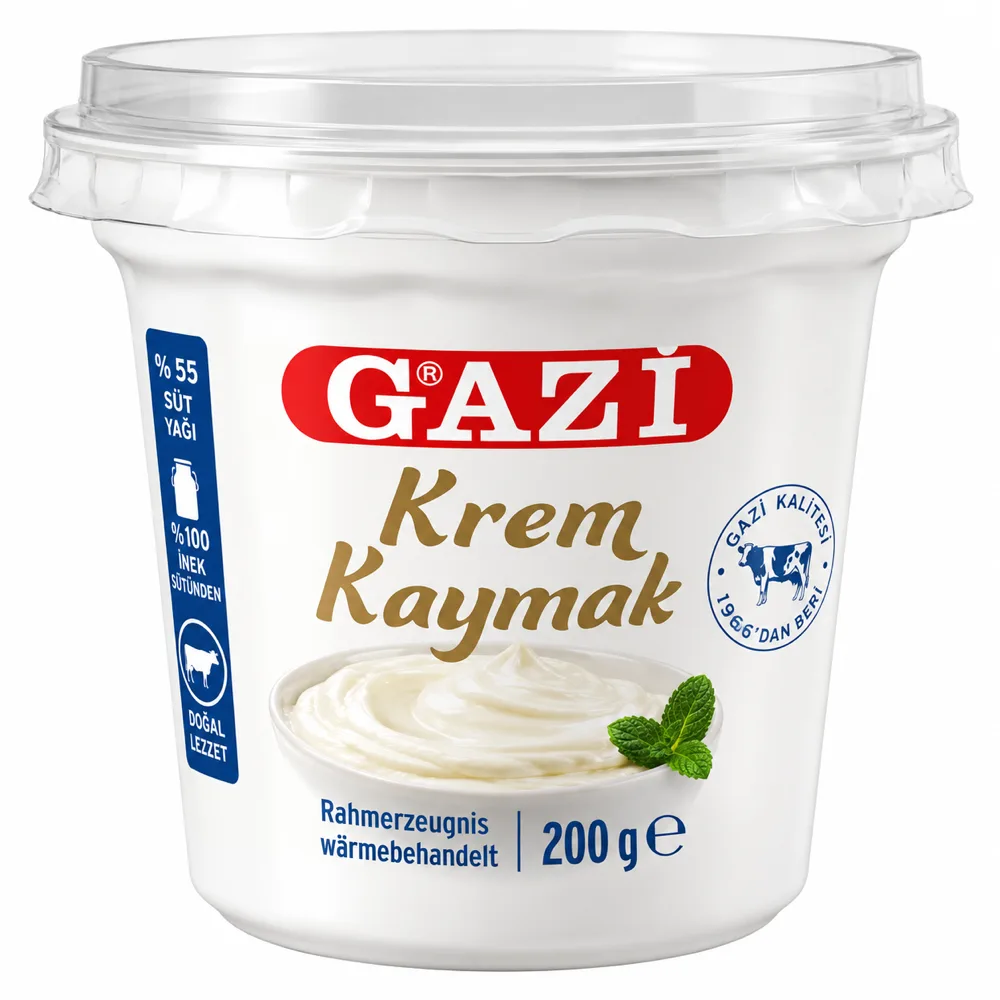
The buffalo or sheep's milk clotted cream of Anatolia. Spreadable, intensely rich, eaten with honey on bread - usually for breakfast or as a sweet course.
Authentic clotted cream (kaymak) is hard to find fresh in Bristol. What's usually sold is UHT or longer-life buffalo cream, which is good but not the same. Some Middle Eastern grocers occasionally have fresh clotted cream (kaymak) from Istanbul-area producers in small quantities - it's a once-in-a-while purchase, not a weekly one.
Halal-considered chilled meats
Beyond fresh meat (which is butchery, not chilled aisle), the chilled cured-meat shelf includes:
- Halal beef sausage - see the halal beef sausage guide.
- Preserved lamb in fat - covered below.
- Air-dried cured beef - air-dried, fenugreek paste-coated cured beef. Thin-sliced for mezze, eggs, or sandwiches.
- Halal cured chicken and turkey - emerging in some halal supermarkets; check the certifier.
Preserved lamb in fat - the 5-minute breakfast saver
A small clay pot or vacuum pouch of cooked, salted, fat-set lamb or beef. A spoonful into a hot pan, an egg cracked over, and you have a complete savoury breakfast in 5 minutes.
What to look for:
- Certified halal beef or lamb from a named body.
- Stored in its own fat - that's the traditional preservation method.
- No added preservatives in the genuine version.
Refrigerated, unopened preserved lamb in fat in fat keeps for months. Opened, use within 2-3 weeks.
What we stock and why
Our chilled selection is small but curated. We stock:
- the regional brands yoghurt (or equivalent regional import yoghurt depending on supply)
- the regional brands or Eker salted yoghurt drink
- Brined white cheese (full-fat, brined)
- Semi-aged hard cheese (sliced)
- Halal beef sausage (covered separately)
- Preserved lamb in fat in fat
- Hellim / halloumi
- A rotating second-tier cheese (sheep's milk cheese or fresh curd cheese when available)
We don't try to compete with a full Turkish supermarket on chilled SKU count. If you need a specific product for a specific recipe, message us - we can usually source it through our supplier network for the next delivery.
Frequently asked
Frequently asked
Is supermarket Greek yoghurt the same as strained yoghurt?
Close but not identical. Greek yoghurt (the strained kind in supermarkets) is closer to regional strained yoghurt than to standard strained yoghurt. For cooking applications (yoghurt-cucumber dip, marinades) Greek yoghurt is a workable substitute; for eating on its own at breakfast or for salted yoghurt drink, a proper regional-brand yoghurt is noticeably tangier and creamier.
How long does opened brined white cheese keep?
In the brine (the salted liquid it comes in), 4-6 weeks. If you discard the brine and refrigerate in a sealed container, 2 weeks. Always smell-test before using - properly preserved brined white cheese doesn't go off easily, but the brine is what protects it.
Can I make my own labneh in the UK?
Easily - full-fat plain yoghurt + a muslin cloth + 12-24 hours in the fridge over a bowl. Mix in a little salt at the start if you want it seasoned. Make 500g of yoghurt and you'll get 250-300g of labneh. Much cheaper than buying labneh balls.
Why is salted yoghurt drink salted?
Tradition - salted yoghurt drinks are common across the Turkic and Caucasian world and the salt does two things: extends shelf life slightly, and pairs better with the spiced, grilled foods salted yoghurt drink traditionally accompanies. Unsalted salted yoghurt drink exists in some regional traditions but the salted version is standard.
Where can I buy fresh clotted cream (kaymak) in Bristol?
Hard to find. UHT buffalo cream is widely stocked at Middle Eastern grocers and is the practical alternative. If you need fresh clotted cream (kaymak) for a special occasion (engagement breakfast, etc.), check with a Middle Eastern butcher 2 weeks in advance - they sometimes order from Istanbul-area suppliers on demand.
Where to go next
- The full pillar - Middle Eastern groceries in Bristol.
- Middle Eastern breakfast essentials - where most of these chilled items go.
- Halal beef sausage buying guide - companion to the chilled meats section.
- Browse our groceries.
Shop this guide
Keep reading
Related reading
- Middle Eastern groceries
Middle Eastern groceries in Bristol: what to buy and where to get it delivered
The staples every Middle Eastern kitchen keeps, how the pantry works, what to check on the label, and how our Bristol grocery delivery brings them together in one order with your halal meat.
Read the guide - Halal certification & sourcing
Hand slaughter vs mechanical slaughter: what's the difference, and why does it matter?
Most UK halal poultry is machine-slaughtered. Most British Muslim scholars say it shouldn't be. Here's what each method actually involves, and why the strictest UK certifiers sit on the hand-slaughter side of the debate.
Read the guide - Halal living in Bristol
Mosques in Bristol: a working directory for 2026
A community-maintained directory of Bristol's mosques - Easton Jamia, Bristol Jamia, Totterdown, Bristol Central - with Jumu'ah times, women's facilities, languages, and contact details. Updated twice a year.
Read the guide - Cooking halal at home
Whole lamb roast for Eid: the centrepiece method
How to slow-roast a whole halal lamb shoulder or leg for the Eid table - from rub through resting, with notes for British ovens and Bristol weather.
Read the guide