
Whole lamb roast for Eid: the centrepiece method
How to slow-roast a whole halal lamb shoulder or leg for the Eid table - from rub through resting, with notes for British ovens and Bristol weather.
Halal certified · Hand-slaughter standards · Delivered to any BS postcode
The Eid table needs a centrepiece. For most Middle Eastern families, that centrepiece is a whole or half lamb - shoulder, leg, or a combination - slow-cooked until the meat falls off the bone and the kitchen smells of cumin and garlic for the entire afternoon.
This recipe is the method we use ourselves and recommend to families ordering our Eid lamb box. It's not a fast recipe - but it's almost impossible to mess up if you trust the timing, and the result is the kind of dish people remember for years.
Equipment
A deep roasting dish large enough to fit the shoulder with room to spare; a sheet or two of heavy foil; an oven that holds 140-160°C steady (most do); a sharp knife for carving / pulling.
If your shoulder is larger than 2.2 kg, increase the cooking time proportionally - roughly 30 minutes per additional 500g.
Ingredients
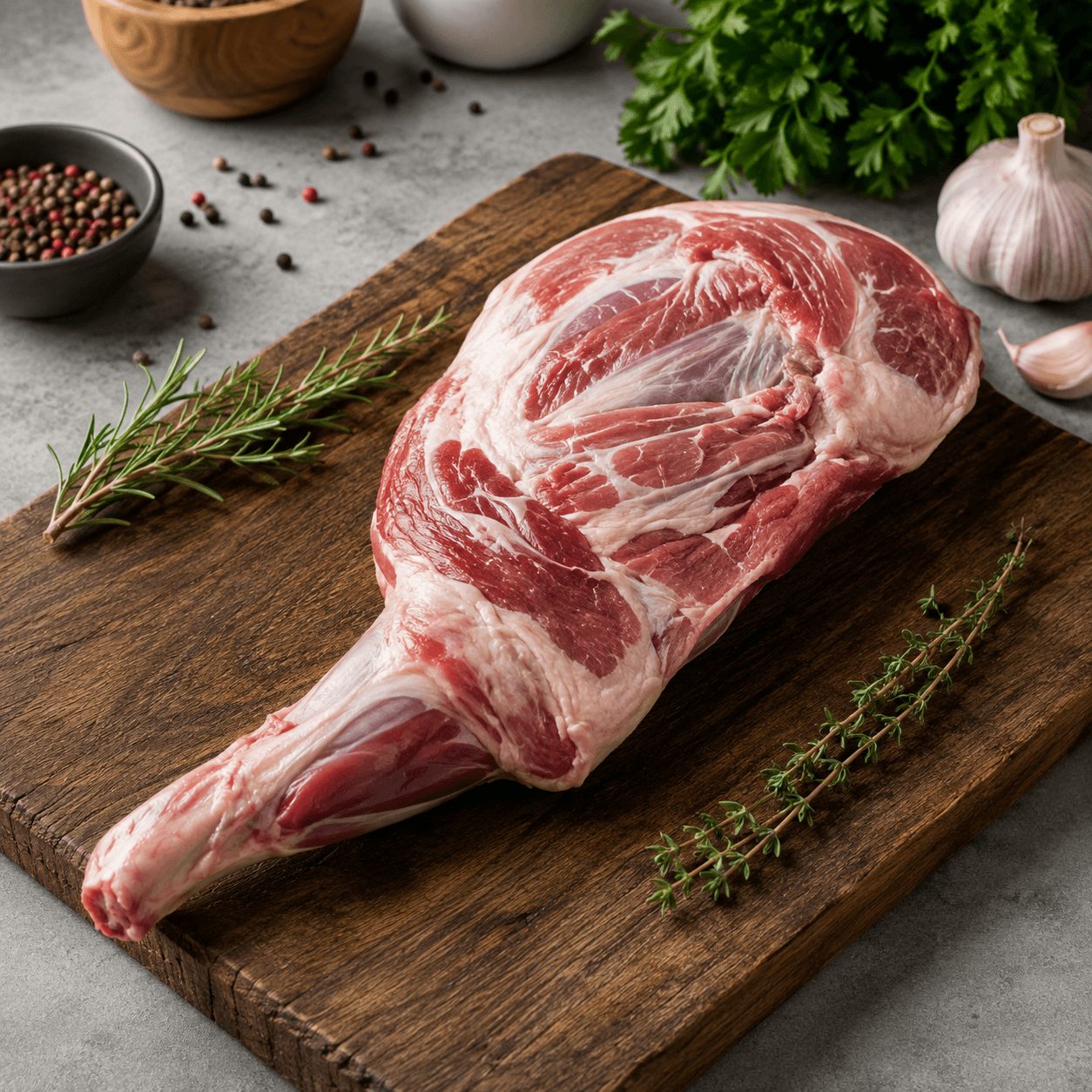
A whole bone-in lamb shoulder, 1.8 – 2.2 kg, halal-certified. Olive oil, ground cumin, sweet paprika, ground coriander, black pepper, sea salt, 8 garlic cloves, 2 lemons (zest + halves), a bunch of fresh rosemary or thyme, 1 large red onion sliced, 300 ml water or stock.
Optional additions: ground cinnamon for a more Levantine note; baharat spice blend instead of separate spices; chunks of potato added to the pan in the last hour to catch the juices.
Method (the longer version)
- Take the lamb out of the fridge 1 hour before cooking. Cold meat from the fridge takes much longer to roast and tends to dry on the edges before the centre is done.
- Make the rub. Olive oil + cumin + paprika + coriander + black pepper + salt + crushed garlic + lemon zest. Stir to a thick paste.
- Score the fat. Crosshatch the fat cap with a sharp knife. This helps the rub penetrate and the fat render.
- Rub the lamb thoroughly. Get the paste into every cut, around the bones, into the underside. Take 5 minutes - this is where the flavour lives.
- Build the pan. Spread sliced red onion across the bottom of a deep roasting dish - this becomes a flavour-bearing trivet. Sit the lamb fat-side up on the onions. Tuck rosemary / thyme around. Squeeze lemon halves over and tuck them in too.
- Add liquid. Pour 300 ml water or stock into the bottom of the dish - not over the lamb. This creates steam during the slow phase and prevents burning.
- Cover tightly. Two layers of foil sealed at the edges. Steam is the secret to the fall-apart texture.
- Low and slow. 140°C fan / 160°C conventional for 4 hours. Don't open the oven.
- Uncover and finish. After 4 hours, remove the foil. Increase oven to 200°C fan / 220°C conventional. Roast another 30-40 minutes uncovered to crisp the top.
- Rest. Loosely tent with foil; let sit 20-30 minutes. The juices redistribute; the meat continues to relax. Skipping the rest gives you tough, dry meat.
- Serve. Pull the meat with two forks (it should fall apart) or carve thick slices. Spoon pan juices over.
What to serve with it
The classic Eid table accompaniments:
- Pilaf - rice or bulgur. The pan juices are exquisite over plain pilaf. See the cooking pillar for the base technique.
- Yoghurt sauce or yoghurt-cucumber dip. Plain yoghurt + crushed garlic + salt; or full yoghurt-cucumber dip with cucumber and mint.
- Flatbread. Warm boat-shaped flatbread, lavash, or any large flatbread. People will tear pieces and use them to scoop meat and juices.
- Salads. A sharp tabbouleh or fattoush balances the richness. See the cooking pillar for both.
- Pickled chillies or pickle. Cuts through the fat.
- Roasted vegetables. Add chunks of potato, carrot, or aubergine to the pan in the last hour for a one-tray meal.
Common mistakes
- Cooking too hot. High oven shrinks the meat and dries it out before the connective tissue breaks down. Stay at 140-160°C for the slow phase.
- Not covering tightly. Without steam, the meat turns leathery. Double-layer the foil.
- Skipping the rest. Cutting straight from the oven loses 30% of the juices to the board.
- Cooking from cold. The centre stays cool while the outside dries. Always temper to room temperature first.
- Forgetting the pan liquid. Without water or stock at the bottom, the spice rub burns and the juices reduce too far.
Scaling up
A whole bone-in shoulder is 1.8-2.2 kg and serves 8 adults generously (with sides). For larger gatherings:
- 2 shoulders side by side - fits in most large roasting dishes; cook time roughly the same.
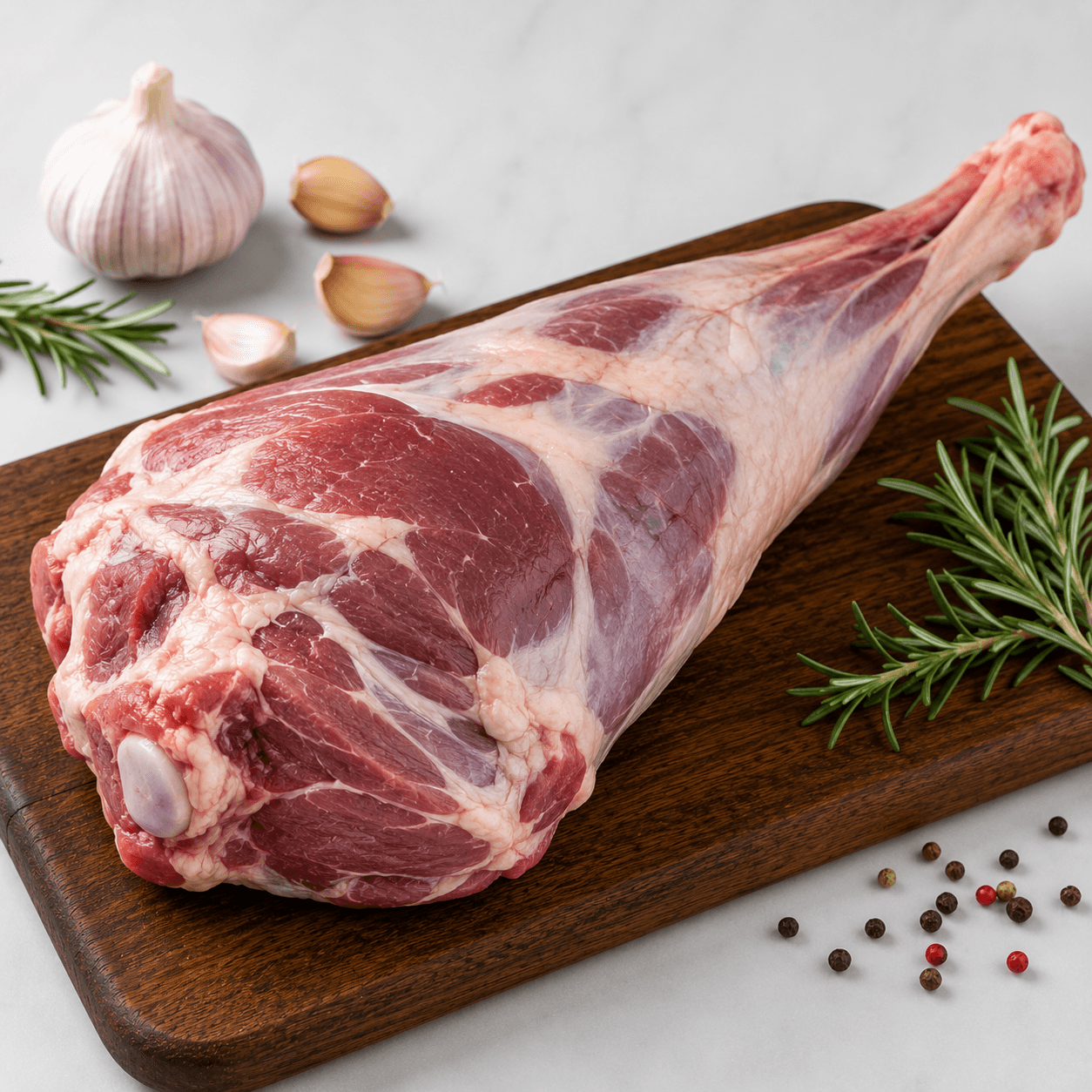
- Whole leg (2.5-3 kg) - same method, increase slow-cook time to 4.5 hours, finish at high heat for 30 minutes.
- Whole lamb (in a clay oven or commercial oven) - different equipment; not a home recipe. Ask us before ordering and we will check with our halal butcher partner.
Storage and leftovers
Leftover lamb keeps 3-4 days in the fridge, well-wrapped. Reheat gently in a covered dish at 130°C with a splash of stock to prevent drying. Use leftovers in:
- Sandwiches with hummus and pickles.
- Pilaf additions stirred in at the end.
- Cold cuts on a meze board the next day.
- Stews - diced and simmered in a tomato-paste base for a quick second life.
Why we like this recipe for Eid specifically
It's slow, low-maintenance, and lets the cook participate in the rest of Eid day (prayer, visits, kids) rather than being stuck at the stove. Once the lamb is in at 140°C, you have 4 hours of hands-off time. That matters when the whole family is around.
Frequently asked
Frequently asked
Can I prepare the lamb the night before?
Yes - rub the spice paste on the lamb, cover tightly, refrigerate overnight. Take out 1 hour before cooking to come to room temperature. The overnight rest actually deepens the flavour.
What if I don't have rosemary or thyme?
Substitute with bay leaves or skip entirely. The cumin-paprika-coriander base is the main flavour. Fresh herbs add complexity but aren't structural.
Can I cook this in a slow cooker instead?
Yes - sear the lamb in a hot pan first (5 minutes total), then transfer to a slow cooker on high for 8 hours or low for 12. You won't get the crisp top, so finish under the grill for 5 minutes before serving.
Is this recipe Eid-specific or can I cook it any time?
Absolutely cook it any time. It's a Sunday roast, a celebration meal, a hosting dish. We frame it around Eid because that's the most-asked-about use case, but the recipe is just slow-roasted lamb shoulder.
What lamb cut should I order from your Eid box for this?
A whole bone-in shoulder. If you're ordering the [Eid lamb box](/meat-boxes), specify 'whole shoulder' in the order notes - our halal butcher partner will reserve one for you on cutting day.
Where to go next
- The cooking pillar - equipment, techniques, base recipes.
- slow-cooked lamb shoulder - the variant with stronger spice and longer slow-cook.
- Eid al-Adha Bristol 2026 - the bigger picture.
- Browse our Eid lamb boxes - order before the cut-off.
Shop this guide
Keep reading
Related reading
- Cooking halal at home
Cooking halal at home: the home cook's working guide
How to actually use the meat boxes - equipment, base techniques, the ten dishes every household should master, meal-prep patterns for busy weeks. By the founder of Halal Bristol.
Read the guide - Halal certification & sourcing
Hand slaughter vs mechanical slaughter: what's the difference, and why does it matter?
Most UK halal poultry is machine-slaughtered. Most British Muslim scholars say it shouldn't be. Here's what each method actually involves, and why the strictest UK certifiers sit on the hand-slaughter side of the debate.
Read the guide - Middle Eastern groceries
Middle Eastern breakfast essentials: how to build a real Middle Eastern breakfast table in Bristol
Halal beef sausage, brined white cheese, olives, jam, eggs, sesame bread ring, tea - what goes on a proper Middle Eastern breakfast spread and how to source every component without flying to Istanbul.
Read the guide - Halal living in Bristol
Mosques in Bristol: a working directory for 2026
A community-maintained directory of Bristol's mosques - Easton Jamia, Bristol Jamia, Totterdown, Bristol Central - with Jumu'ah times, women's facilities, languages, and contact details. Updated twice a year.
Read the guide