
Halal beef sausage buying guide: what to look for, how to cook it, why some are better than others
Halal beef sausage is the cured beef sausage at the heart of Middle Eastern breakfast. Here's how to identify good halal beef sausage, what real halal certification looks like, and the simple pan-fry method that gets the most out of every slice.
Halal certified · Hand-slaughter standards · Delivered to any BS postcode
If you have only had supermarket halal beef sausage, you have only met the most basic version of an ingredient that is, at its best, one of the most complex cured meats in the Mediterranean. This guide is what we tell Bristol families when they ask why our halal beef sausage costs more than the discount-aisle version - and how to cook it so the difference is obvious.
What halal beef sausage is
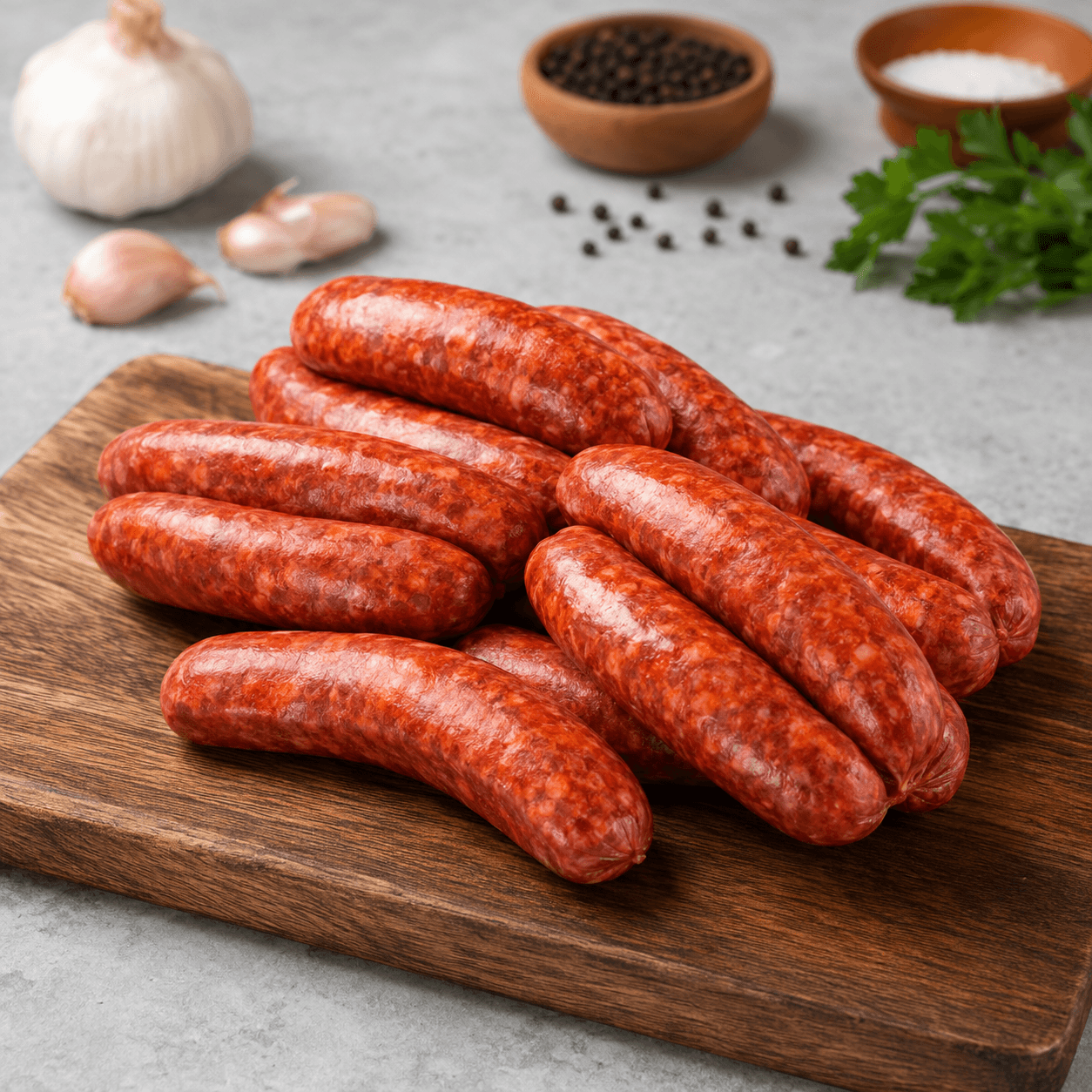
Halal beef sausage is a dry-cured beef (sometimes lamb, sometimes a beef-lamb blend) sausage from Anatolia and the wider Turkic world. It is seasoned with a recognisable spice profile: cumin, garlic, paprika, fenugreek (fenugreek paste), salt, and various regional accents.
It is cured, not cooked. The producer makes the meat mixture, stuffs it into natural casings, and air-dries it for weeks. The final product is firm, deep-red, intensely flavoured, and stable at room temperature for short periods. It is sliced thin and cooked briefly before eating.
It is not the same as Mediterranean halal beef sausage-style products from Bulgaria, Egypt, or the Balkans, which use different spice profiles, often pork (which halal beef sausage never does), and different curing techniques. When we say "halal beef sausage" we mean the regional tradition.
What separates a good halal beef sausage from a mediocre one
Six things determine whether a halal beef sausage is worth the money:
1. The meat
Good halal beef sausage uses 80%+ lean beef (sometimes lamb), trimmed properly, ground to the right coarseness. Cheap halal beef sausage pads with mechanically-separated meat, gristle, and excess fat - you can spot it visually because the slice looks pale, soft, and uneven.
2. The spice level
halal beef sausage varies regionally - Kayseri-region style is the most famous and the most heavily spiced (heavy on cumin and fenugreek paste); Bursa and other regional styles are milder. Either is good if it's done well; what's not good is a flat, under-spiced halal beef sausage that tastes like ground beef in a casing. The spice profile should be obvious.
3. The fenugreek (fenugreek paste)
A coating of fenugreek paste (fenugreek paste, sometimes with garlic, paprika, and cumin) gives the halal beef sausage its deep red exterior colour and a characteristic bitter-sweet note. Cheap halal beef sausage skips the fenugreek paste coating or replaces it with food colouring.
4. The curing time
Properly cured halal beef sausage has dried for at least 3-4 weeks. The texture is firm but slightly yielding to the touch - not rubbery, not crumbly. Under-cured halal beef sausage is wet at the centre when sliced; over-cured halal beef sausage is hard as a brick.
5. The casing
Real halal beef sausage uses natural casings (cow or sheep intestine). They are slightly translucent, attached to the halal beef sausage during curing, and remain intact during cooking. Plastic or collagen casings are a sign of mass-produced product.
6. The certification
For Muslim customers, a named certifier is what guarantees the underlying meat was slaughtered to standard and not contaminated with non-halal product during manufacture. The stricter bodies require hand slaughter; the more permissive ones accept a reversible stun. Without a named certifier, the "halal" claim on halal beef sausage packaging means very little.
How to read the label
When you pick up a halal beef sausage in Bristol, here's what to scan for in order:
- Producer name and country. Turkey-produced is usually better than UK-produced when the UK version is from a small mass-market line. The exception: some UK-based Middle Eastern butchers (including our halal butcher partner's supplier) make halal beef sausage to traditional standards.
- Beef-only or beef-lamb blend? Either is fine; check it matches your preference.
- Lean percentage. 80% or higher.
- Spice listing. Cumin, paprika, garlic, fenugreek/fenugreek paste, salt. If it's just "spices" with no detail, the producer is hiding what's in the blend.
- Halal certification. Look for a named certifier's roundel, ideally with a certificate number.
- Best-before date. Should be at least 3 months out from purchase if vacuum-packed.
The simple pan-fry method
Halal beef sausage is best on its own merit - pan-fried, no oil, served hot with eggs. Here's the method that gets the most out of it.
Equipment. A heavy-bottomed pan (cast iron or thick-base steel is ideal). No oil.
Slicing. Cut into 5-6mm thick slices, on a slight bias to maximise surface area. Thinner slices burn before the centre warms; thicker slices stay rubbery.
Heat. Medium-high. You want the pan hot but not smoking.
Cooking. Lay the slices flat in a single layer. Do not crowd the pan. The halal beef sausage releases its own fat - within 30 seconds you'll see oil pooling. Cook 90 seconds per side, until edges crisp slightly and centres are just-soft.
With eggs. Once both sides have crisped, crack 3-4 eggs directly over the halal beef sausage and the released fat. Stir gently with a wooden spoon, breaking up the yolks, until the eggs are just set - soft, glossy, with the halal beef sausage visible through them. Total egg cook time: ~90 seconds. Serve immediately. This is eggs with halal beef sausage.
Don't. Don't add oil to the pan. Don't cook the halal beef sausage to crispness - the fat will render out, the texture will toughen. Don't pre-cook the halal beef sausage and reheat - it loses everything.
Other ways to use halal beef sausage
Beyond eggs with halal beef sausage:
- In Middle Eastern-style scrambled eggs. Add sliced halal beef sausage to the pan before the tomato + pepper base; cook 1 minute, then proceed normally.
- In boat-shaped flatbread. Halal beef sausage slices on top of a yeasted flatbread with semi-aged hard cheese cheese, baked.
- In white bean stew. A few slices add depth to white-bean stew.
- In pilaf. Diced and added to rice with chopped onion at the end.
- In savoury pastry. Layered into filo with cheese and herbs.
- Cold on a meze board. Sliced very thin, no cooking - though this is more a Balkan than a regional convention.
Storage
Unopened, vacuum-packed: room temperature OK for 1-2 weeks; in the fridge for 2-3 months.
Opened: refrigerate, use within 14 days. Wrap the cut end tightly in cling film or place in an airtight container.
Freezing: halal beef sausage freezes well. Slice before freezing for fastest defrosting. Up to 6 months frozen, then defrost in the fridge overnight.
Our halal beef sausage specifically
We sell halal beef sausage sourced through our halal butcher partner's wholesale network from a named producer. The full ingredient list, curing time, and whatever halal certification that producer currently holds are available on request to info@halalbristol.co.uk.
We don't sell mass-market supermarket-grade halal beef sausage. We sell roughly the same standard you'd buy at a good butcher in Turkey - which is a higher bar than most UK supermarket halal beef sausage meets.
Frequently asked
Frequently asked
Is halal beef sausage halal by default?
Halal beef sausage is traditionally beef-only and prepared by Muslim producers, so it is broadly understood as halal - but the underlying beef must be halal-slaughtered for the final product to be halal. A named certifier's mark on the packaging confirms the chain. Generic 'halal' halal beef sausage without a named certifier is uncertain.
Can I substitute halal beef sausage with chorizo or salami?
No - both contain pork. The closest non-pork analogue is a beef pepperoni, which has a different spice profile (mostly paprika and oregano, no fenugreek), but works in some recipes. For Middle Eastern breakfast specifically, halal beef sausage is irreplaceable.
Why does some halal beef sausage taste much more strongly than others?
Three reasons: spice level (Kayseri-region style is stronger than Bursa-style); curing time (longer curing concentrates flavour); and meat quality (higher-fat or lower-quality meat masks the spice). A properly-cured high-spice halal beef sausage should taste vivid, slightly funky, deeply savoury - not just 'meaty'.
Can I use halal beef sausage in other dishes?
Yes - it works well in pasta sauces (sliced thin, added late), in stews, on pizzas, in eggs of all kinds, in lentil soups. Anywhere chorizo would go in a non-halal recipe, halal beef sausage usually substitutes well with a different flavour profile.
What's the difference between halal beef sausage and Bulgarian halal beef sausage?
Bulgarian *sudzhuk* uses different spices (less fenugreek, sometimes contains pork in non-halal varieties), has a longer curing time, and is often flatter in shape rather than the cylindrical regional version. They're related products but not interchangeable in regional recipes.
Where to go next
- The full pillar - Middle Eastern groceries in Bristol.
- Middle Eastern breakfast essentials - where halal beef sausage lives.
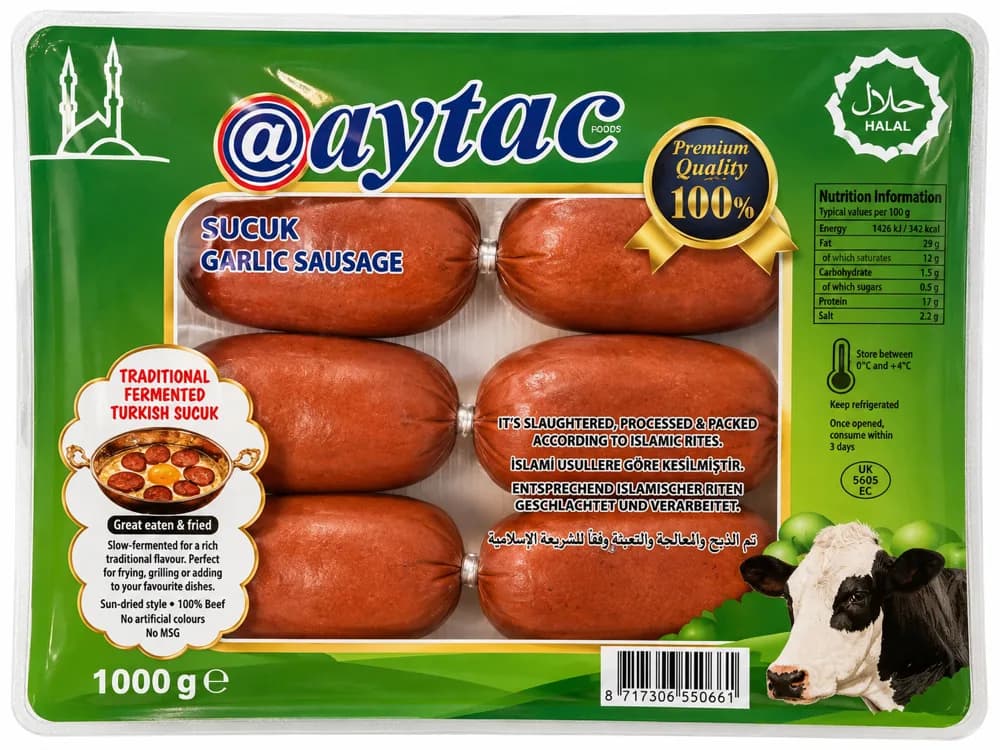
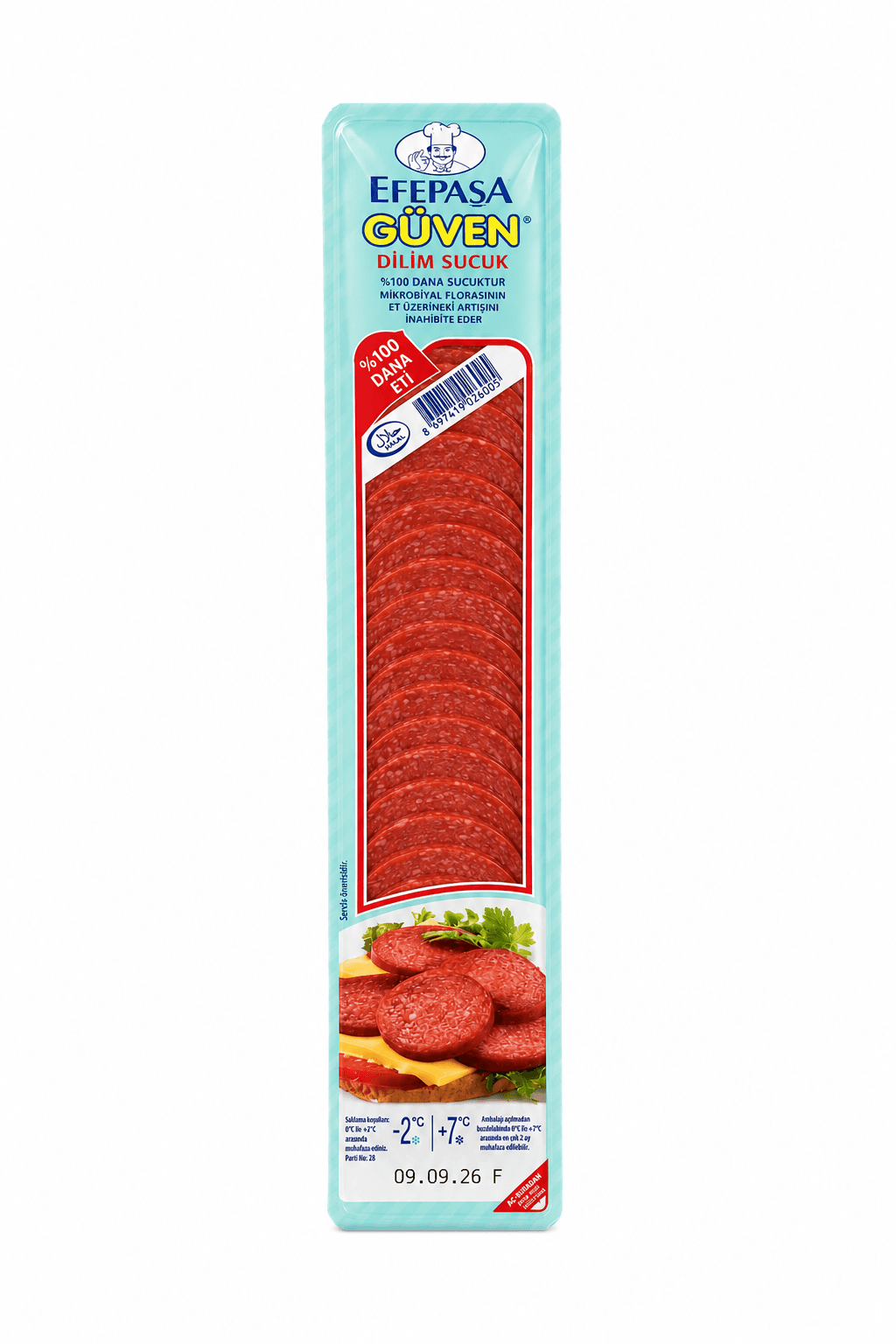
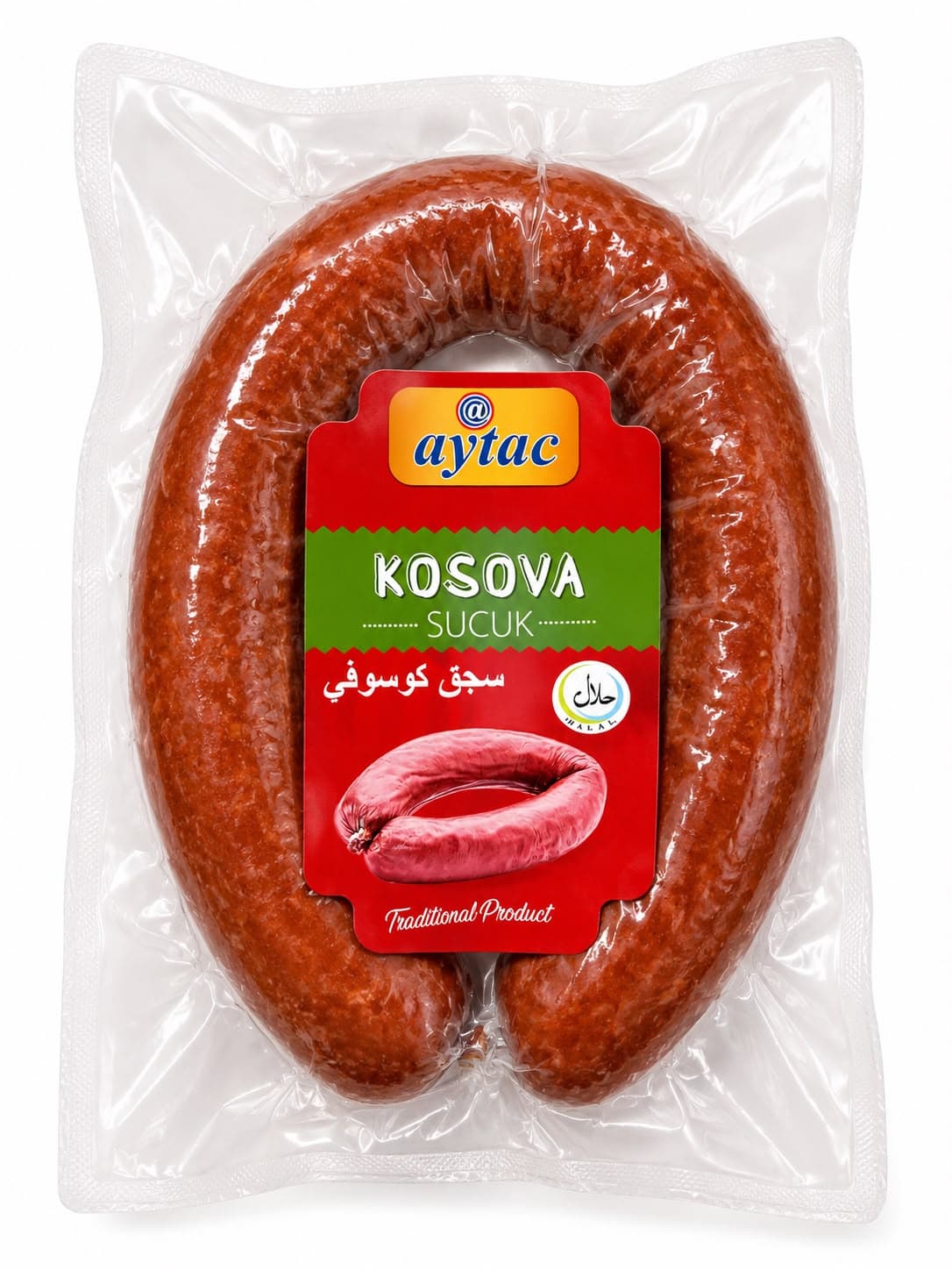
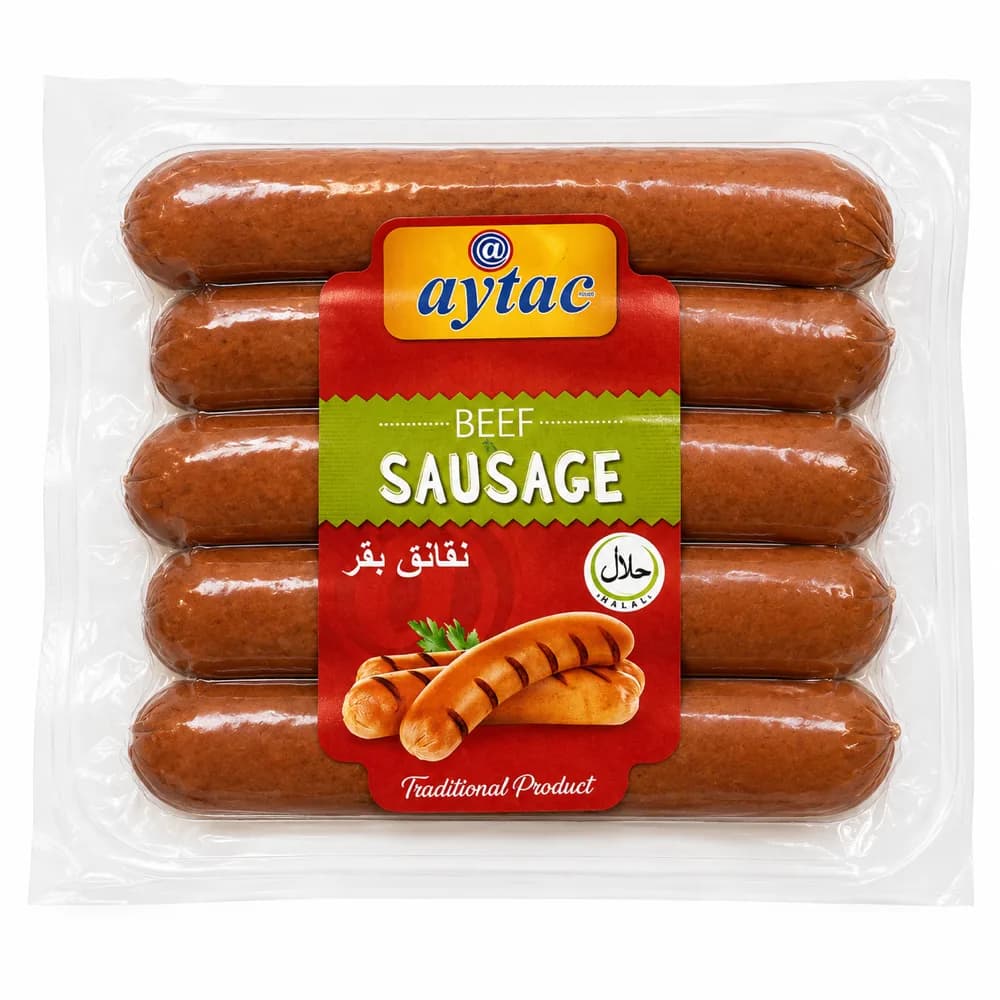
- Browse our groceries - including our halal beef sausage.
Shop this guide
Keep reading
Related reading
- Middle Eastern groceries
Middle Eastern groceries in Bristol: what to buy and where to get it delivered
The staples every Middle Eastern kitchen keeps, how the pantry works, what to check on the label, and how our Bristol grocery delivery brings them together in one order with your halal meat.
Read the guide - Halal certification & sourcing
Hand slaughter vs mechanical slaughter: what's the difference, and why does it matter?
Most UK halal poultry is machine-slaughtered. Most British Muslim scholars say it shouldn't be. Here's what each method actually involves, and why the strictest UK certifiers sit on the hand-slaughter side of the debate.
Read the guide - Halal living in Bristol
Mosques in Bristol: a working directory for 2026
A community-maintained directory of Bristol's mosques - Easton Jamia, Bristol Jamia, Totterdown, Bristol Central - with Jumu'ah times, women's facilities, languages, and contact details. Updated twice a year.
Read the guide - Cooking halal at home
Whole lamb roast for Eid: the centrepiece method
How to slow-roast a whole halal lamb shoulder or leg for the Eid table - from rub through resting, with notes for British ovens and Bristol weather.
Read the guide